
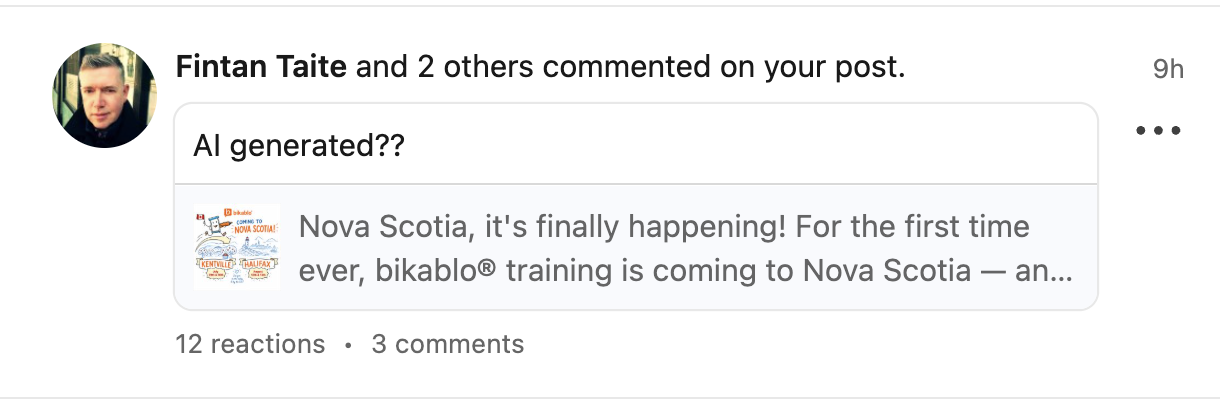
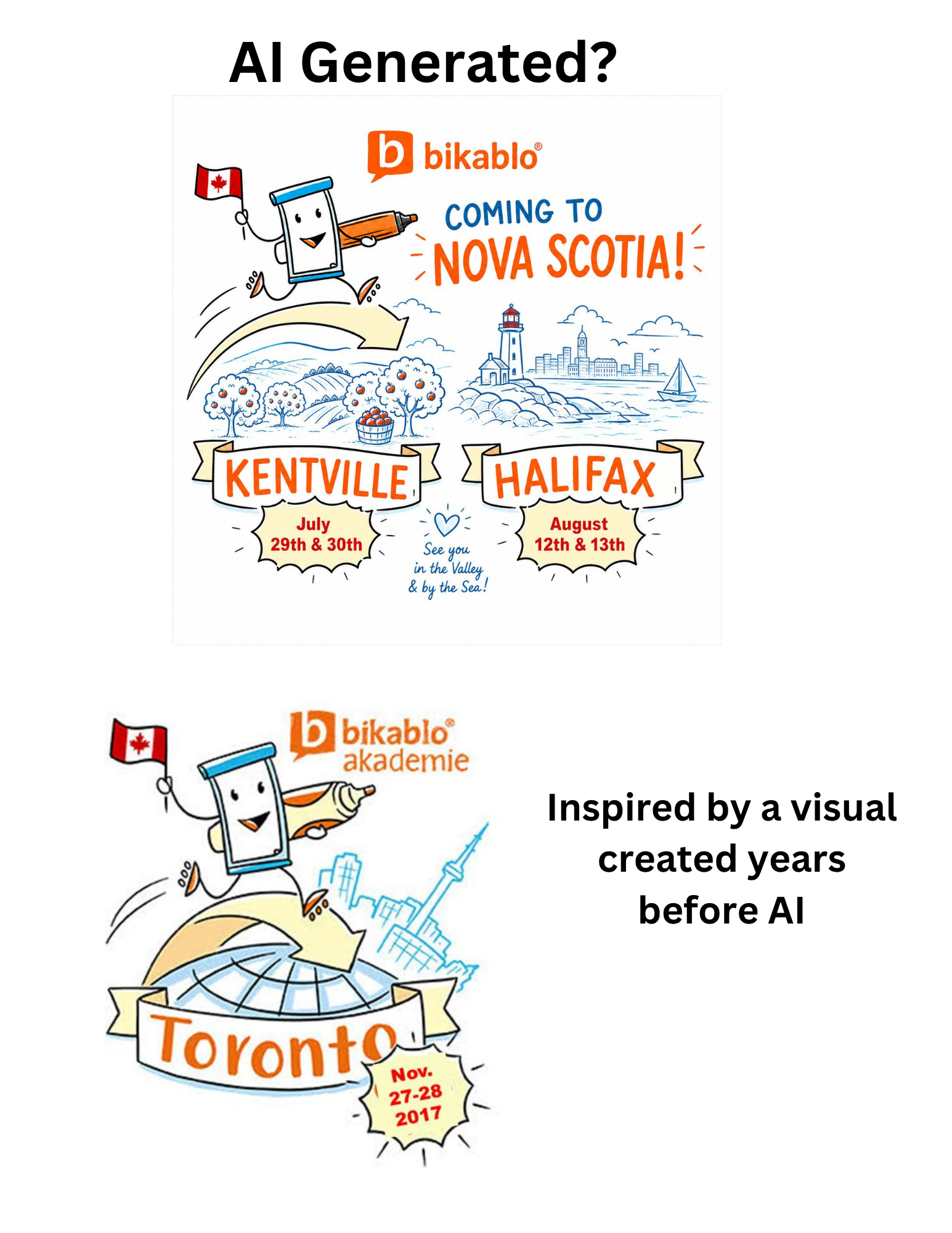
A few days ago, I shared a graphic promoting an upcoming bikablo® training.
Someone commented:
"AI generated."
At first, I wasn't quite sure how to take it.
Then I realized something.
It was a really good question.
The image was inspired by a visual the bikablo team created years ago—long before AI image generators existed. I used that concept as inspiration and then used AI tools to help create an updated promotional version.
Their comment made me stop and think.
As someone who teaches visual thinking and visual facilitation, where does AI fit?
More importantly...
What are we actually valuing when we look at a visual?
I Didn't Become a Bikablo Trainer to Draw Better Pictures
One of the reasons I was drawn to the bikablo® method is that it gets people away from screens.
It slows conversations down.
It helps people think together.
It makes ideas visible in real time.
At the heart of bikablo isn't the drawing.
It's the conversation.
It's the moment when someone sees their idea appear on a wall and says,
"Yes—that's exactly what I meant."
Or when a group suddenly realizes they are talking about the same thing for the first time.
That's where the value lives.
People sometimes assume visual thinking is about becoming a better artist.
For me, it never was.
I'm not an illustrator.
I'm not a graphic designer.
Could I spend hours learning to create more detailed and realistic drawings?
Absolutely.
But that's not where I choose to invest most of my practice.
I draw every day, but most of that practice is focused on simplification.
How do I draw a customer in five seconds?
A process in ten seconds?
A conversation in real time?
Because when you're standing in front of a room helping people solve problems together, speed and clarity matter far more than artistic perfection.
That's why the AI comment made me pause.
Not because I felt accused.
But because it forced me to think about what I actually value in visual communication.
The artwork?
Or the understanding it creates?
Drawn by Hand. Enhanced by AI.
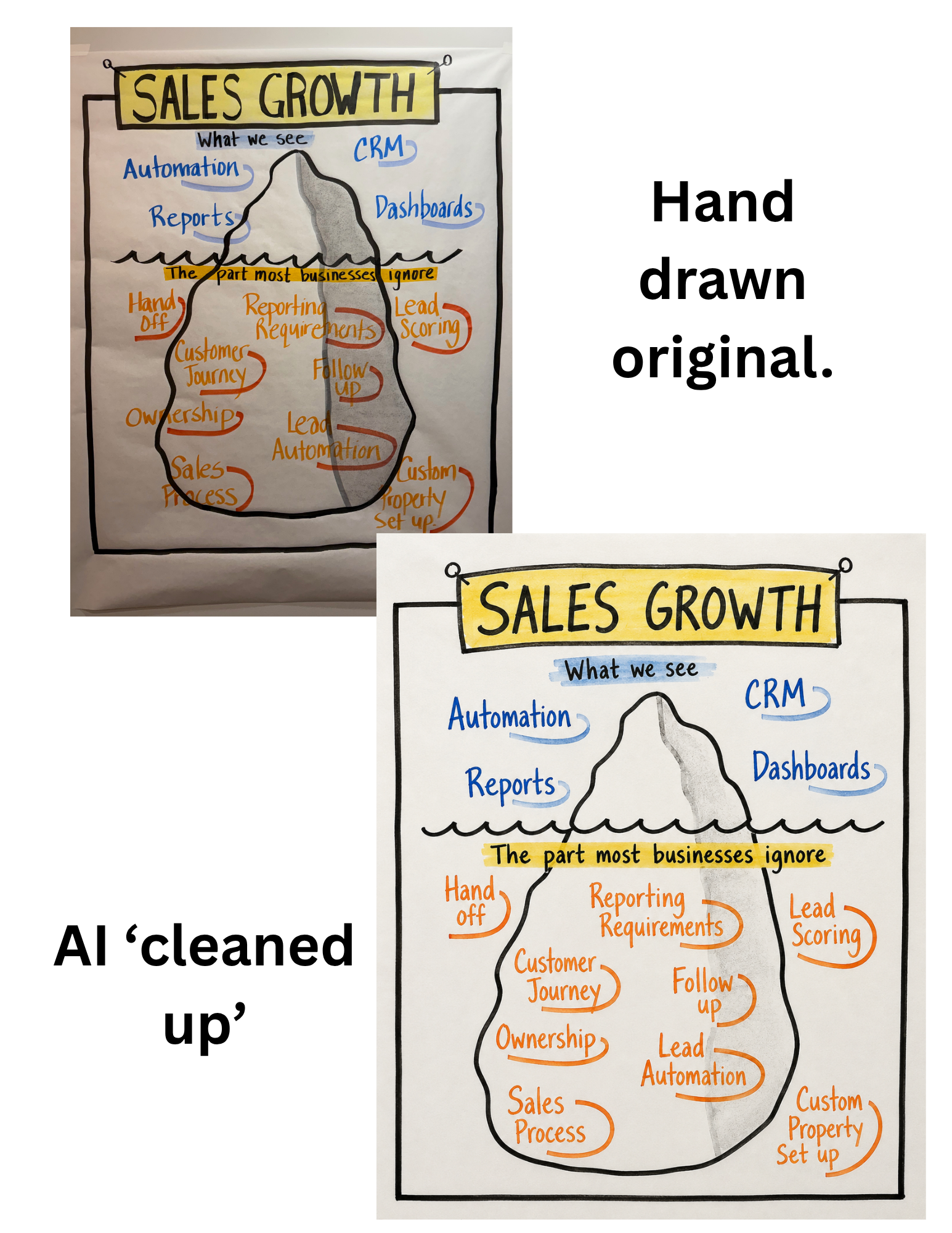
Recently I've been experimenting with AI.
Sometimes I've used it to create promotional graphics.
Other times I've taken drawings I created myself and asked AI to clean them up, improve the lighting, straighten the perspective, or prepare them for a website.
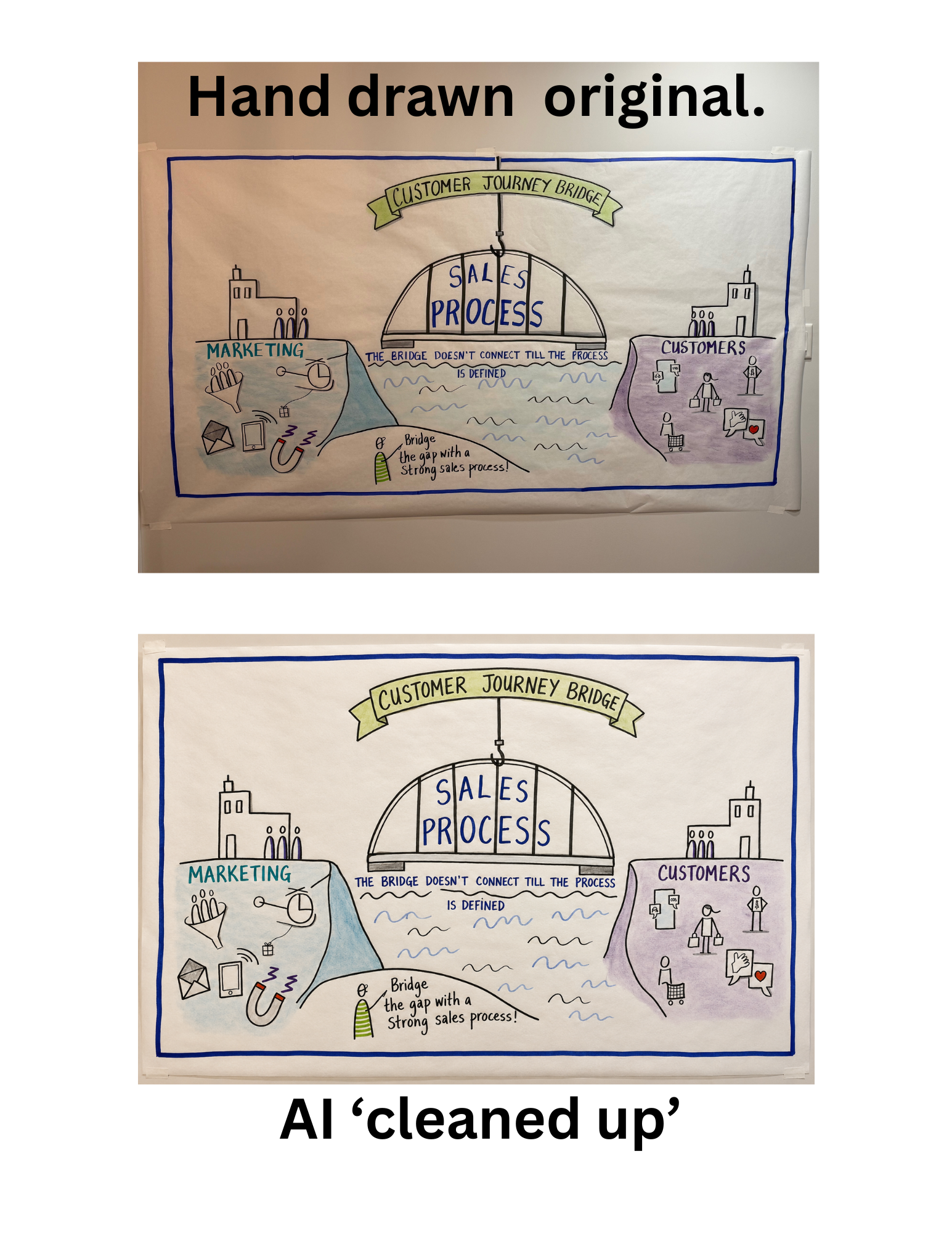
The thinking was mine.
The original drawing was mine.
AI simply helped polish the presentation.
Is that okay?
I honestly don't know.
But I think it's a conversation worth having.
A Hammer Is Still a Hammer
One of the images below is a hammer that took me nearly an hour to draw.
The other took about ten seconds.
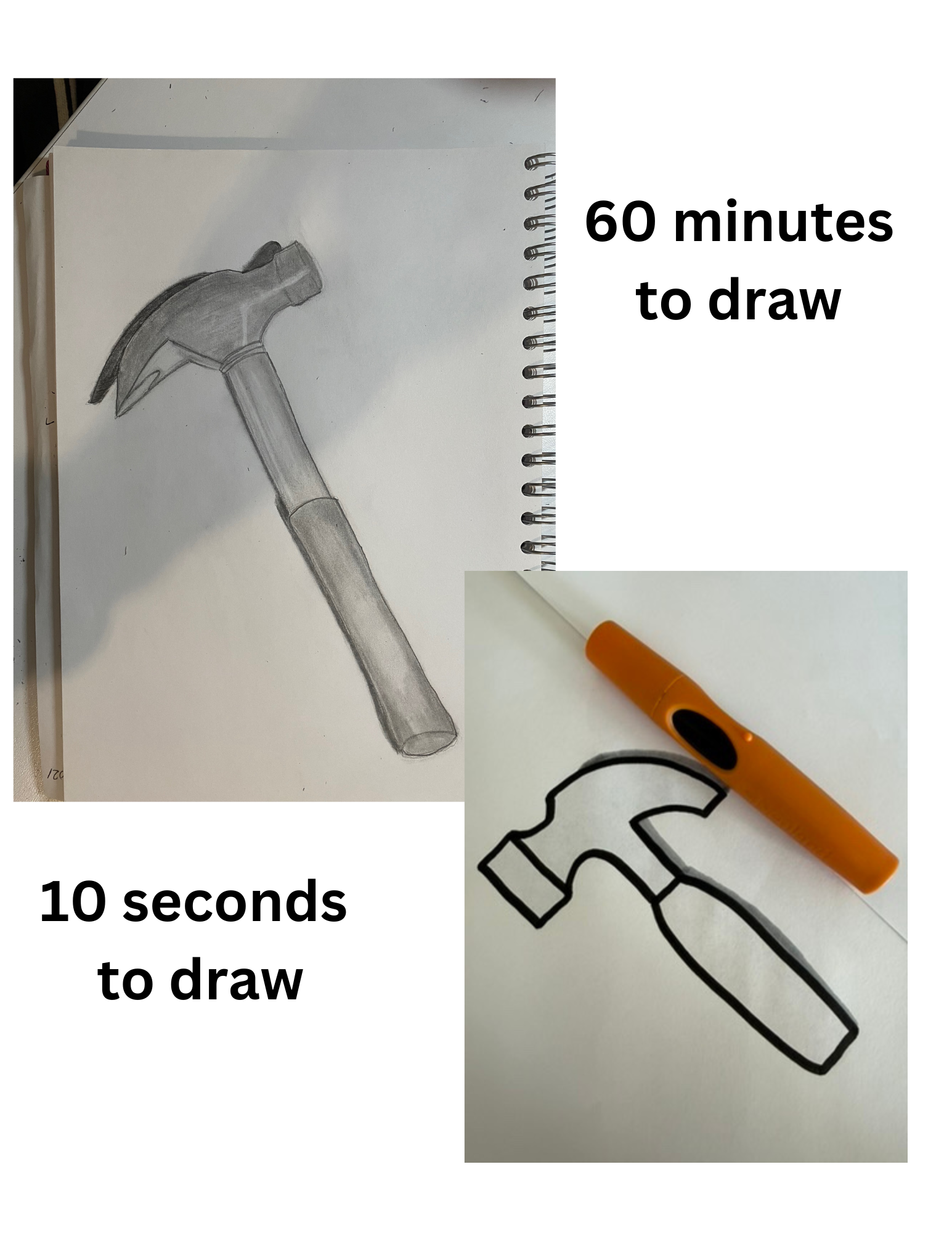
Most people immediately understand both.
The detailed hammer demonstrates artistic skill.
The simple hammer demonstrates visual communication.
Neither is inherently better.
They simply serve different purposes.
That's one of the biggest lessons visual thinking has taught me.
The goal isn't always beautiful drawings.
The goal is understanding.
We Already Use AI Every Day
Many of us are already comfortable with AI when it helps us write.
Grammarly suggests edits.
Canva removes backgrounds.
Our phones automatically enhance photos.
Microsoft and Google complete our sentences.
We rarely question those tools.
Yet when AI enters the visual space, many of us become uncomfortable.
Why?
What makes visual creation feel different?
The Irony
The more I think about it, the more I see an irony.
As AI becomes better at generating content, visual thinking may become more important—not less.
AI can generate images.
AI can generate presentations.
AI can generate reports.
But it can't stand in front of a room and notice confusion.
It can't hear the hesitation in someone's voice.
It can't draw the one sketch that suddenly helps a team understand one another.
It can't create the shared understanding that happens when people think together.
That's still deeply human.
What Are We Really Valuing?
When we look at a visual, what are we actually valuing?
The craftsmanship?
The creativity?
The communication?
The understanding it creates?
I don't have all the answers.
I'm still figuring out where I stand.
But I know this.
A beautifully drawn image that creates confusion isn't nearly as valuable as a simple sketch that creates clarity.
And if AI can help us communicate ideas more effectively without replacing the human thinking behind them, perhaps the question isn't whether AI belongs in visual communication.
Perhaps the better question is...
How should we use it?
I'd genuinely love to hear your thoughts.
Topics: AI, bikablo, Visual Thinking