
People often ask me,
"Where should I start if I want to learn visual thinking?"
It's a great question.
Over the past several years, my bookshelf has slowly filled with books on visual thinking, graphic facilitation, sketchnoting, data visualization, creativity, leadership, and communication.
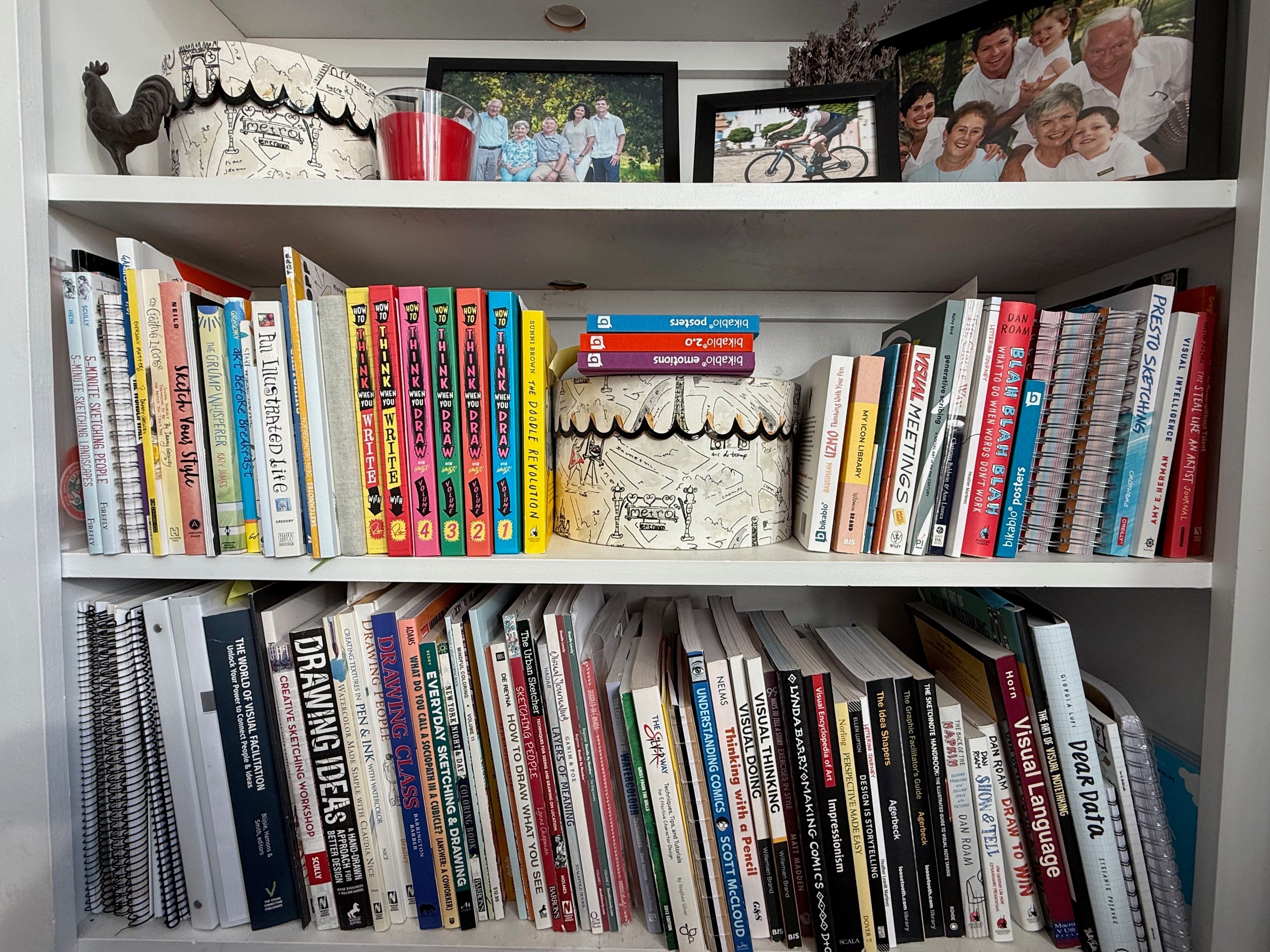
Some taught me how to draw.
Some taught me how to think.
Others completely changed the way I facilitate meetings, design workshops, and communicate ideas.
Rather than simply sharing a reading list, I thought I'd share the journey—because each book arrived at exactly the right time.
It All Started with a Doodle
The first book that truly changed my thinking was The Doodle Revolution by Sunni Brown.
Like many people, I'd been conditioned to believe doodling was something you did when you weren't paying attention.
Sunni completely turned that idea upside down.
She taught me that doodling isn't a distraction.
It's another way of thinking.
Looking back, that book gave me permission to pick up a marker.
Learning to Solve Problems with Pictures
Once I discovered visual thinking, I quickly found Dan Roam.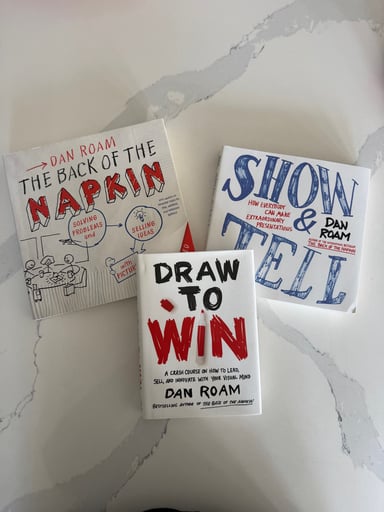
Books like The Back of the Napkin, Unfolding the Napkin, Blah Blah Blah, Show and Tell, and Draw to Win became constant companions.
Dan doesn't really teach drawing.
He teaches problem solving.
He taught me that simple pictures can explain incredibly complex ideas—and often better than words alone.
Even today, I still find myself returning to his work.
Discovering Visual Facilitation
As my interest grew, I wanted to understand how visuals could help groups think together.
David Sibbet's books—Visual Meetings, Visual Teams, and Visual Leaders—opened an entirely new world.
These books aren't about drawing.
They're about collaboration.
David taught me that visuals aren't simply communication tools—they're thinking tools.
Around the same time, I discovered Gamestorming by Dave Gray, another book that challenged me to think differently about participation, creativity, and facilitation.
Learning to Listen with a Marker
One of my favourite authors in this space is Brandy Agerbeck.
The Graphic Facilitator's Guide helped me see graphic recording through a completely different lens.
More recently, The Idea Shapers reinforced something I deeply believe:
Drawing isn't about artistic talent.
It's about helping people shape ideas together.
Brandy taught me that listening may be the most important drawing skill of all.
Expanding My Thinking
As my library continued to grow, so did my appreciation for the many ways visuals help us think and communicate.
Mike Rohde's The Sketchnote Handbook introduced another approach to visual note-taking.
Willemien Brand's Visual Thinking, Visual Doing, and Visual Thinking Workbook explored how visual thinking can become part of everyday business communication.
Cole Nussbaumer Knaflic's Storytelling with Data reminded me that clarity matters just as much as creativity.
Alberto Cairo's How Charts Lie challenged me to think more critically about the visuals we consume.
Austin Kleon's Steal Like an Artist encouraged me to embrace inspiration as part of the creative process.
Amy Herman's Visual Intelligence reminded me that before we can draw well, we first have to learn how to see.
Even books like The Circle Way and Heather Martinez's The Letter Journey have influenced how I facilitate groups and communicate visually.
Each author taught me something different.
Together, they've helped shape the way I think.
Then I Found bikablo®
Eventually, my journey led me to bikablo®.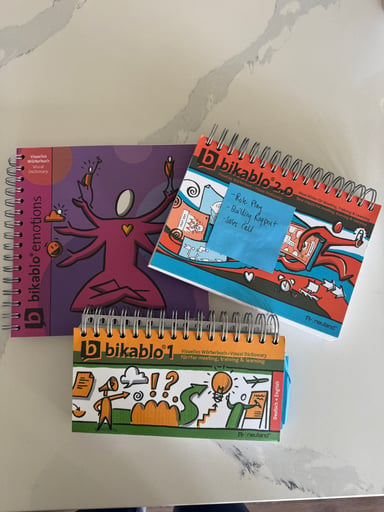
At first it was the workshops.
Then the community.
Then the methodology.
And finally, becoming Canada's bikablo® trainer.
Like many visual thinkers, I've added several bikablo resources to my bookshelf over the years.
Books like UZMO – Thinking With Your Pen, the bikablo® visual dictionaries, and bikablo® emotions are fantastic reference books. They continue to inspire my visual vocabulary and remind me how powerful simple drawings can be.
But interestingly, the resources I find myself reaching for most often aren't the larger reference books.
They're the small bikablo Basics booklets that participants receive as part of the training.
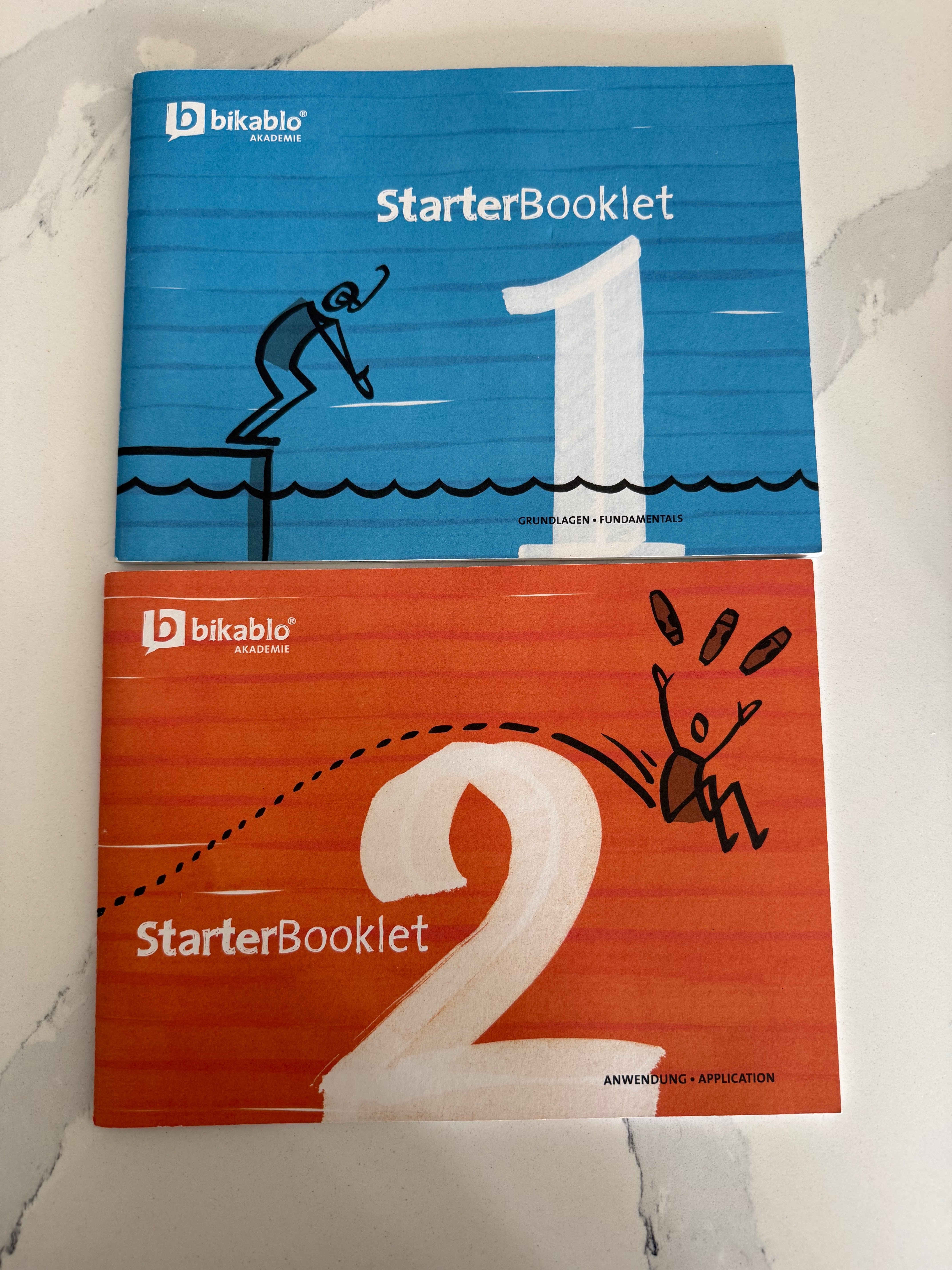
In fact I recently did a flip through these booklets in a Market Moment -- check out the video below.
They're beautifully designed.
Simple.
Practical.
And incredibly intentional.
Rather than overwhelming you with hundreds of icons, they capture the heart of the bikablo method in a way that's easy to understand, easy to practice, and easy to return to.
They're the perfect companion after a training course because they reinforce the key concepts, encourage regular practice, and make it easy to keep building your confidence one drawing at a time.
They're also the books I most often recommend people keep on their desk rather than on their bookshelf.
Because they get used.
In fact, I recently recorded a Marker Moment where I flip through these little books and share why they've become some of my favourite visual thinking resources. If you're curious about what participants actually take home from a bikablo® course, it's a great place to start.
For me, those little books perfectly reflect the bikablo philosophy itself.
Simple.
Practical.
Approachable.
And designed to be used—not just admired.
Where Should You Start?
If you're new to visual thinking, here's where I'd begin:
📖 The Doodle Revolution — because sometimes all we need is permission to start.
📖 The Back of the Napkin — to discover how pictures help solve problems.
📖 Visual Meetings — to see how visuals transform collaboration.
📖 The Graphic Facilitator's Guide — to learn the art of listening with a marker.
📖 The bikablo Basics booklets — the resources I return to most often. They don't just inspire ideas; they help you build a practical visual vocabulary that you'll use every day.
Looking Back
When I look across my bookshelf today, I don't just see books.
I see teachers.
Sunni Brown taught me to stop apologizing for doodling.
Dan Roam taught me that pictures solve problems.
David Sibbet taught me that groups can think visually.
Brandy Agerbeck taught me to listen with a marker.
The bikablo methodology taught me that simplicity is a skill.
And those little bikablo Basics booklets continue to teach me every time I open them.
Looking back, every one of these books arrived at exactly the right moment.
Some taught me to draw.
Some taught me to facilitate.
Some challenged the way I think.
But together they've shaped the trainer, facilitator, and visual thinker I've become.
And thankfully...
I'm still adding new books to the shelf.
I'd love to hear from you.
What's the one book that changed the way you think?